
Korean-English sermon translation: planning for Sunday
Plan Korean-English sermon translation: language needs, volunteer roles, a rehearsal, welcome wording and a fallback.
SermonLM Team · · 6 min read
한국 교회에서 한국어와 영어로 함께 듣는 설교를 준비하려면
한국어와 영어로 설교를 듣는 자리를 준비하고 계신가요? 먼저 목회자와 봉사자가 설교할 언어와 듣는 분들에게 필요한 언어를 함께 확인해 보세요. 아래 내용은 교회 상황에 맞게 의논해 보실 준비 사항입니다.
설교할 언어와 듣는 분들의 필요를 확인해 주세요
설교자가 어떤 언어로 말씀을 전할지 먼저 정해 보세요. 듣는 분들에게는 “설교를 어떤 언어로 듣는 것이 편하신가요?”라고 여쭤보세요. 나이나 교회에 다닌 기간을 보고 필요한 언어를 짐작하지 않는 편이 좋겠습니다.
설교 언어와 듣고 싶은 언어를 구분해서 적어 보세요. 한국어에서 영어로, 또는 영어에서 한국어로 전달해야 한다면, 가입 후 무료 체험을 시작하시고 예배 전에 사전 점검에서 필요한 통역 방향을 테스트해 보세요.
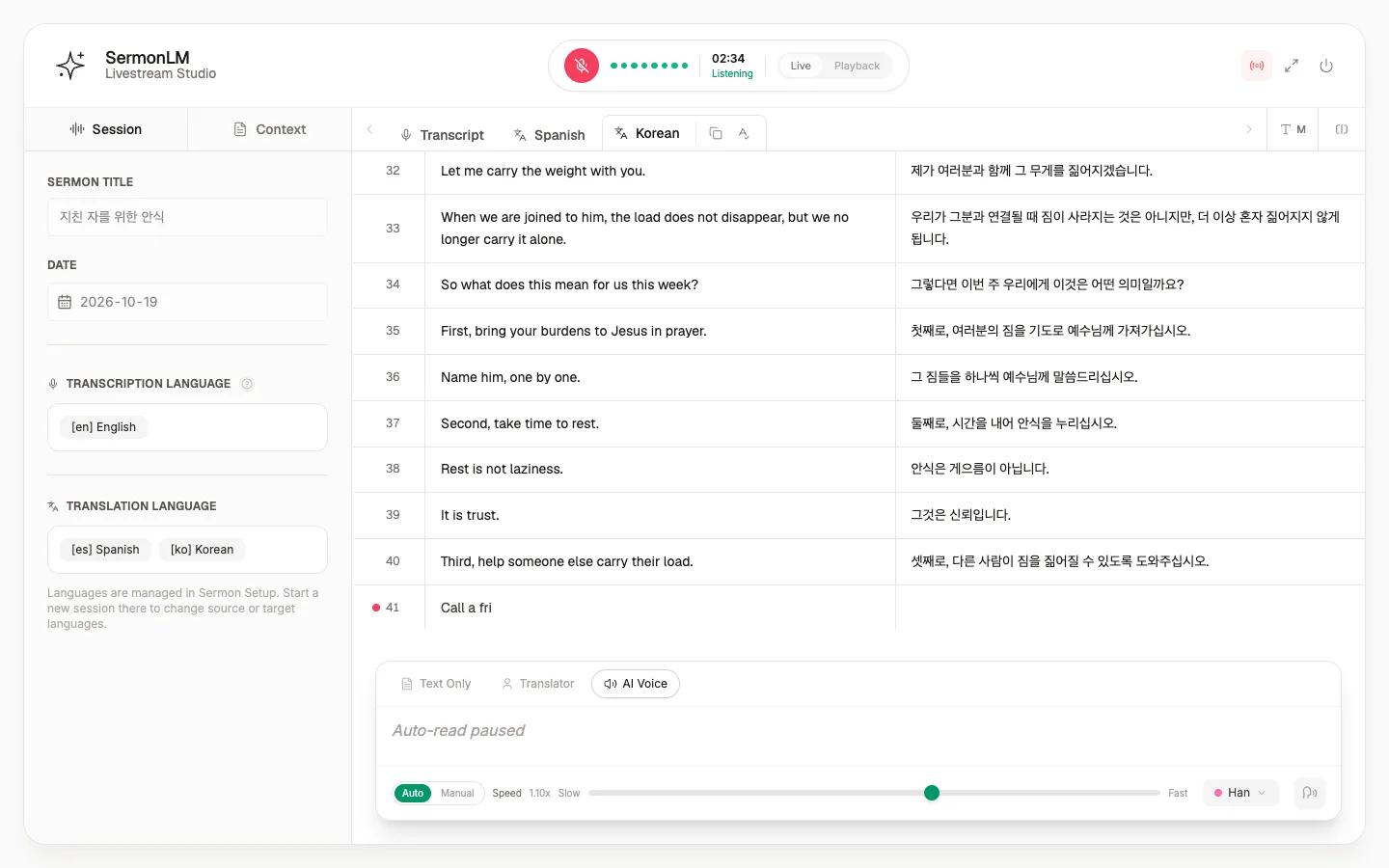
봉사자가 맡을 일을 미리 나누어 주세요
안내문을 준비할 분, 듣는 분들을 도울 분, 질문을 목회자에게 전달할 분을 정해 보세요. 각자 맡은 일을 설명해 보며 서로 이해한 내용이 같은지도 확인해 주세요.
사전 점검에 참여할 분과 준비 여부를 최종적으로 판단할 분도 정해 두시면 좋겠습니다. 아직 해결되지 않은 질문도 함께 적어 두세요.
주일 전에 QR 접속과 듣기를 점검해 주세요
SermonLM은 다국어 교회를 위한 실시간 설교 통역 서비스입니다. 통역자 모드, 교인 청취, QR 코드 접속 기능을 제공합니다. 교인은 QR 코드를 스캔하고 자신의 휴대전화로 듣습니다.
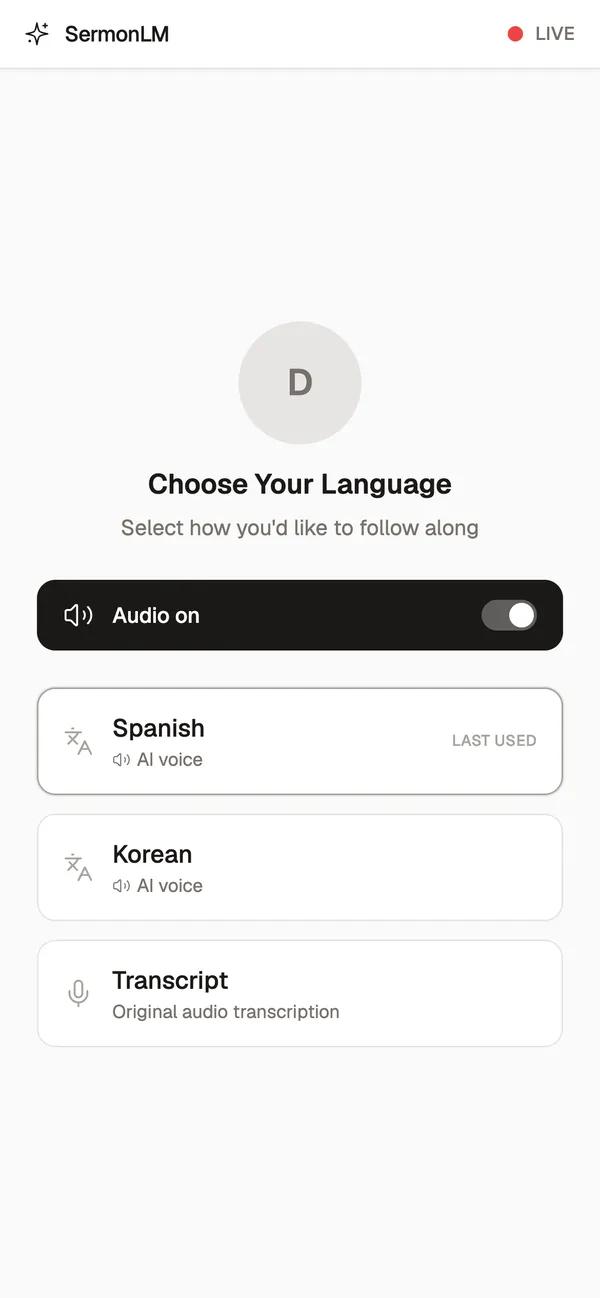
SermonLM을 검토하고 계시다면, 가입 후 무료 체험을 시작해 보세요. 예배 전에 사전 점검에서 교회에 필요한 한국어·영어 통역 방향을 테스트해 보세요.
주일 전에는 계획한 예배 상황에 맞춰 QR 접속과 듣기를 점검하는 시간을 마련해 보세요. 봉사자가 처음 이용하는 분의 입장에서 확인하고, 안내가 더 필요한 부분이나 해결되지 않은 질문을 적어 보도록 해 주세요. 점검 결과를 바탕으로 사용할 준비가 되었는지 판단해 주세요.
환영 안내와 대안을 준비해 주세요
점검 후에는 실제로 확인한 내용에 맞춰 한국어와 영어 안내문을 작성해 보세요. 환영 문구는 이렇게 시작할 수 있습니다. “환영합니다. 설교를 어떤 언어로 듣고 싶으신지 안내 봉사자에게 말씀해 주세요.” 준비가 확인되지 않은 듣기 방법을 안내하지 않도록 문구를 살펴봐 주세요.
계획한 방법으로 듣기 어려울 때 어떻게 안내할지도 미리 의논해 주세요. 목회자와 봉사자가 실행할 수 있다고 확인한 대안을 정하고, 누가 그 내용을 전달할지 합의해 두세요. 해결되지 않은 문제를 예배 중에 계속 시도할지도 사전에 정해 보세요.
예배 후에는 봉사자와 듣는 분들의 의견을 들어 주세요
봉사자에게는 맡은 일이 분명했는지, 어느 부분에서 도움이 더 필요했는지 물어보세요. 듣는 분들에게는 안내를 이해할 수 있었는지, 원하는 언어로 듣는 데 어려움이 있었는지 여쭤보세요.
다음 예배 전에 바꿀 점과 다시 확인할 점을 구분해서 적어 보세요. 사전 점검만으로 준비가 끝났다고 여기기보다, 참여한 분들의 의견을 다음 계획에 반영해 주세요.
한국어·영어 예배를 준비하시려면 가입 후 무료 체험을 시작해 보세요.
How a Korean church can run one sermon in Korean and English
Are you planning for people to hear a sermon in Korean and English? Begin with a conversation between the pastor and volunteers about the spoken sermon language and listeners’ needs. Use the questions below to shape a plan for your church.
Agree on the spoken language and ask listeners
Decide which language the preacher will speak. Ask listeners, “Which language would you prefer for the sermon?” Avoid guessing from someone’s age or how long they have attended.
Write down the spoken language and requested listening language separately. If your plan requires Korean to English or English to Korean, start a free trial when you sign up, then test the direction you need in a rehearsal before a service.
Agree on volunteer responsibilities
Decide who will prepare the welcome instructions, help listeners and bring questions to the pastor. Ask volunteers to describe their responsibilities so you can check that everyone understands the plan.
Agree who will attend the rehearsal and who will decide whether the plan is ready. Keep unresolved questions together.
For the rest of the service, our guide on how to run a bilingual church service includes steps for slides, the welcome and announcements in both languages.
Test QR access and listening before Sunday
SermonLM is live sermon translation for multilingual churches. It offers translator mode, congregant listening, and QR-code access. Congregants scan a QR code and listen on their own phone.
If your team is new to this, start with the sound and voice setup, then read roles for guest, pastor and tech volunteer.
If you are considering SermonLM, start a free trial when you sign up, then test the Korean-English direction your church needs in a rehearsal before a service.
Before Sunday, arrange a rehearsal to check QR access and listening for the proposed service. Ask a volunteer to approach it as a new listener would. Note where guidance is needed and which questions remain unresolved. Use those findings to decide whether the plan is ready.
For that rehearsal, how to test live sermon translation before Sunday lists what to check with a helper, from what guests hear to the meaning.
Prepare a welcome instruction and a fallback
After testing, write Korean and English instructions that reflect what you have confirmed. A welcome message could begin: “Welcome. Please tell a welcome volunteer which language you would prefer for the sermon.” Review the wording for any listening options you have not verified.

Discuss what to do if someone cannot listen as planned. Choose a fallback the pastor and volunteers have confirmed they can carry out, and agree who will explain it. Decide beforehand whether to keep troubleshooting during the service.
Ask volunteers and listeners afterward
Ask volunteers whether their responsibilities were clear and where they needed more help. Ask listeners whether they understood the welcome instructions and what difficulties they encountered with their preferred listening language.
Write down what to change and what to test again before the next service. Include participants’ feedback when revising the plan, rather than treating the rehearsal as the end of preparation.
Start a free trial when you sign up. For more planning help, read our Korean-English church guide.