
Spanish-English sermon translation: a Sunday plan
Prepare Spanish-English sermon listening with a welcoming arrival, clear volunteer roles, a practical rehearsal and a clear Sunday handover.
SermonLM Team · · 5 min read
A useful Spanish-English sermon translation plan starts with what a listener needs on arrival: a welcome, a clear explanation and someone who can help before the sermon begins.
Prepare that experience alongside the listening arrangement. Decide who will greet people, what you can confidently offer and what happens if the rehearsal leaves a problem unresolved. The aim for the first Sunday is specific: listeners know where to go, volunteers know their responsibilities, and the pastor knows whether the arrangement is ready.
Agree on what you will tell listeners
Ask people which language they prefer to hear during the sermon. Do not infer that preference from nationality, ethnicity, age, family role or church background. Leave room for an answer beyond Spanish or English.
Then write down the planned spoken language and the requested listening language. That describes the church’s need; it does not establish what a particular tool can provide. Check the intended arrangement before announcing it.
Keep the invitation limited to what you have rehearsed. Explain that the plan concerns listening to the spoken sermon, where help will be available and whether listeners should bring a phone and headphones.
The Spanish sermon translation page provides a related resource as you consider that plan. Your Sunday welcome should still reflect the arrangements your church has checked.
Give the welcome volunteer a clear job
Choose a welcome volunteer who can explain the listening plan in the listener’s preferred language, or arrange someone who can help with that conversation. Confirm where the volunteer will stand and when they need to be available.
Give this person a short welcome to practise:
“Which language would you prefer to hear the sermon in? I can explain the listening arrangement we have prepared and help you get started.”
Keep the offer optional. Let people decide whether they want assistance.
Assign the technical check to a named listening volunteer and the final readiness decision to the service coordinator. If someone holds several roles, agree how they will handle a listener needing help while another task needs attention.
Before Sunday, the welcome volunteer should know how to find the listening volunteer without leaving an arriving person wondering what happens next.
Our Sunday guest help kit gives your welcome volunteer wording for the QR card, the welcome announcement and a short phone checklist.
Rehearse the arrival through to hearing the sermon
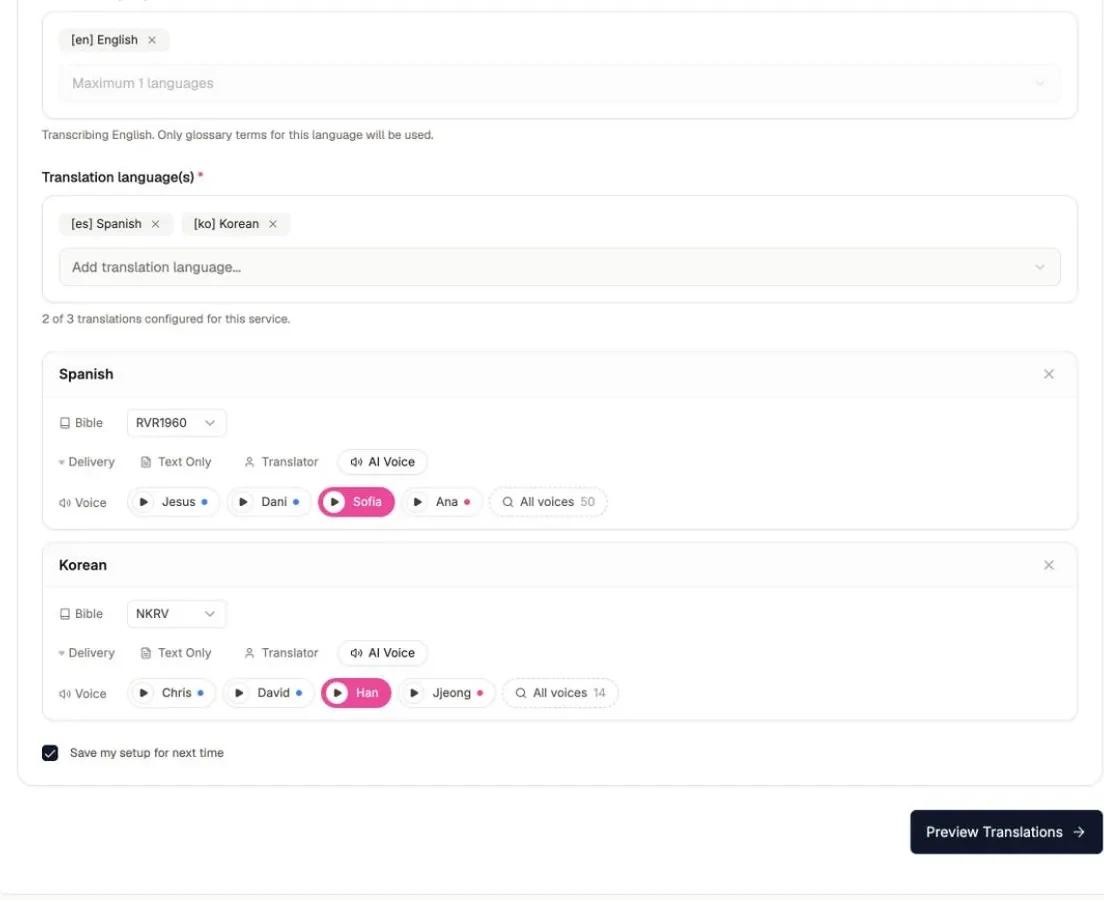
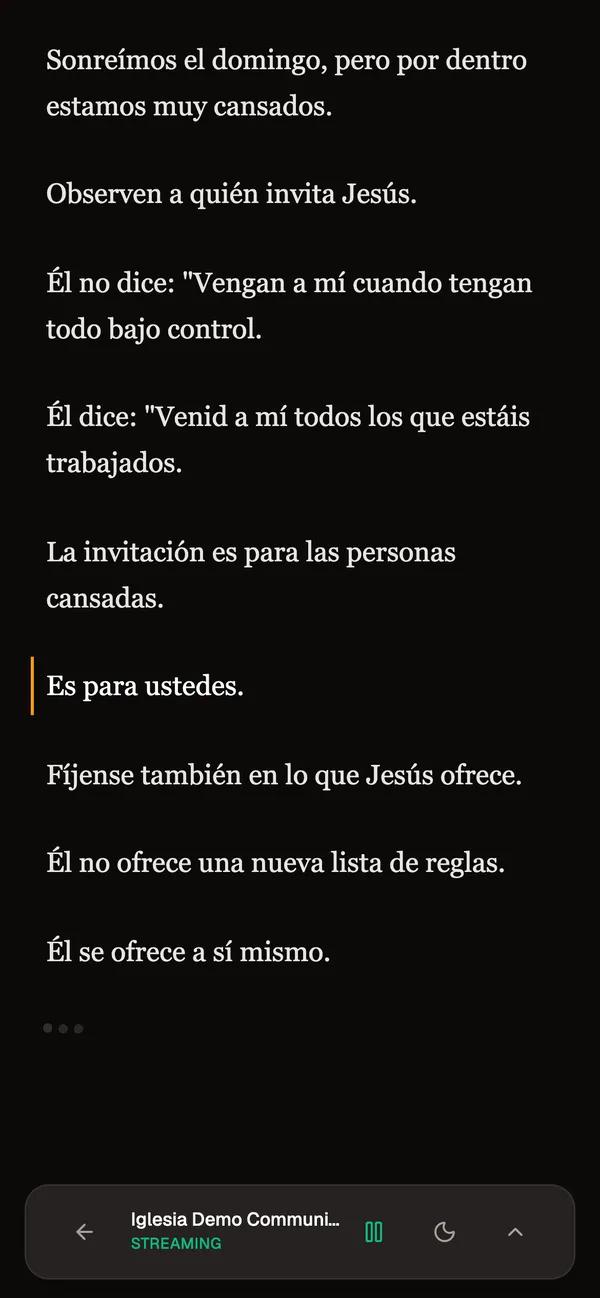
SermonLM is live sermon translation for multilingual churches. It offers translator mode, congregant listening, and QR-code access. Congregants scan a QR code and listen on their own phone.
Before you rehearse, check how the pastor's mic reaches the laptop and what guests, the pastor and the tech volunteer each do.
If you are considering SermonLM, use a rehearsal to assess the intended arrangement before relying on it. Treat the following as preparation recommendations, with the result still to be established.
Ask a willing participant to begin at the entrance, as a new listener would. Have the welcome volunteer explain the plan, help them find the QR code and accompany them to the place where they intend to listen. Use the phone and headphones intended for Sunday.

Have a speaker deliver a prepared sermon excerpt in the planned spoken language. Ask a bilingual reviewer to discuss what the participant heard and understood.
Include an arrival after speaking has begun. Check whether the volunteer can offer help quietly and whether the listener knows whom to approach if listening stops.
Decide whether the plan is ready for Sunday
End the rehearsal with a decision the Sunday volunteers can act on. The service coordinator should give the pastor and helpers a short handover containing:
- Readiness: whether the specific arrangement rehearsed is ready, with any unresolved problem stated plainly.
- Listener support: who welcomes people, who handles listening problems and where each person will be.
- Alternative: what the church has arranged if the planned listening cannot be provided, and who explains that change.
A useful rehearsal outcome is more than a volunteer hearing sound. The participant should be able to reach the listening point, hear the excerpt, discuss its meaning with the reviewer and identify where help is available. Any difficulty should have a named person responsible for resolving it.
Keep the arrangement out of the service if an essential part remains unresolved. Revise the invitation accordingly. An alternative might be a spoken explanation of the sermon afterward by an available bilingual volunteer, agreed with the pastor beforehand.
Close Sunday with the listener’s feedback
Before the sermon, have the coordinator confirm that the volunteers and the agreed arrangement are ready. If something has changed since rehearsal, resolve it before directing listeners to depend on the plan.
Afterward, invite feedback in the listener’s preferred language. Ask what was clear, where they needed help and what would make arrival easier next time. Give people room to describe a problem without having to suggest its technical cause.
Use those answers to choose the next improvement. A clearer welcome, a better place to find help or another rehearsal may be the most useful next step.
When the next improvement is how people hear the sermon, our bilingual church service guide compares the main ways to carry it into a second language.